All species › Cranes, rails and allies › Cranes › Siberian crane
Siberian crane
Leucogeranus leucogeranus | Siberische witte kraanvogel | Grulla siberiana
A snow-white crane with a bare crimson face and black primaries that show only in flight. The western population, which once crossed the Volga delta on its way to Iran, is down to a single wild bird, so anyone seeing one in Europe is almost certainly looking at a released or escaped individual.

Voice
A high, clear, flute-like whistle, kloo-ee, thinner and more musical than the harsh trumpeting of Common Crane and at range more likely to be put down as a goose. Pairs call in duet, the male half-opening his wings and holding them over the back. In Europe the chance of hearing it is negligible.
No freely licensed recording is available for this species yet.
Identification
Very large, wholly white crane with bare crimson skin over forehead, face and bill base, reaching back beyond the eye. The bill is long, heavy and dark red with a finely serrated cutting edge; the legs are pink to reddish and longer than on Common Crane. A standing bird looks all white apart from a faint rusty wash on the crown; only in flight do the black primaries cut across the wing. Juveniles are mottled cinnamon on head, neck and mantle and still have a feathered face.
Confusion species
At long range a Great Egret can suggest it, but egrets fly with the neck folded. Common Crane is slate grey, not white, and shows a black and white neck pattern. The real pitfall is captive-origin cranes: species of the genus Grus have a feathered face with at most a red crown patch, whereas here the whole forehead and face are bare and red. Look too for the black primaries, visible only in flight, and for the strikingly long pink legs.
Habitat
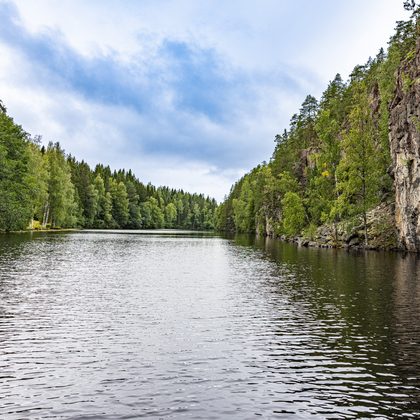
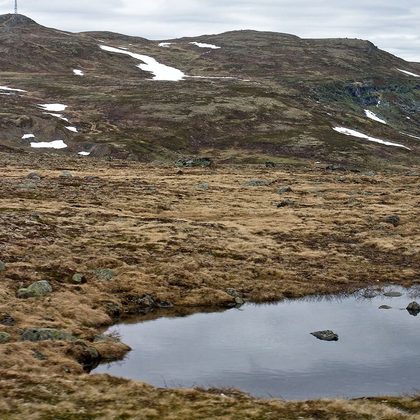
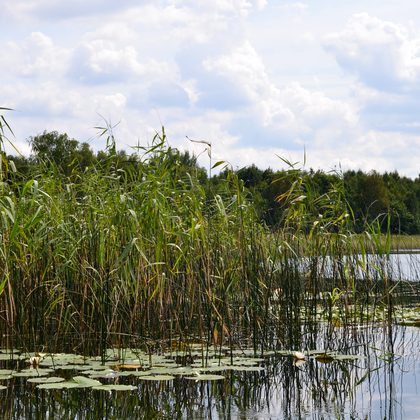
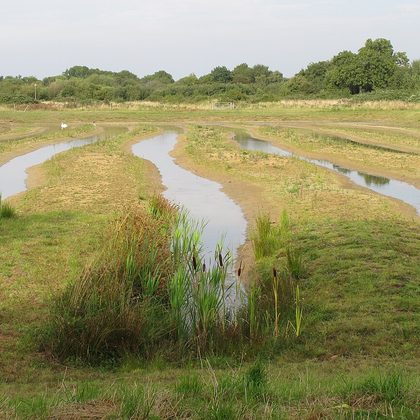
Breeds in low arctic tundra in north-east Siberia, in wide, shallow sedge marshes and polygon mires with much open water, far from any road. Outside the breeding season it stands belly-deep in shallow fresh water and on drying lake margins, digging out tubers with the bill. Western birds wintered in flooded rice fields and duck-trapping compounds on the Iranian Caspian coast.
Where the bird is most at home, classified with EUNIS — the European standard for habitats.

Range and movements
Two populations remain. The eastern one breeds in Yakutia, winters at Poyang Lake in China and now numbers well over five thousand birds. The western one bred in the Ob basin and moved through the Naurzum lakes in Kazakhstan and the Volga delta at Astrakhan to Iran; of that flock a single wild bird is left, wintering alone at Fereydunkenar. For Europe that leaves at most the odd migrant in the Volga and Caspian region, alongside birds from captive-breeding and release schemes.
- Winter
- dark = core range, pale = thinly spread
Where and when to look
This is not a bird to chase in Europe. To see one, go to Poyang Lake in Jiangxi between December and February, where the whole eastern population gathers on a handful of shallow lakes. If a white crane does appear in Europe, check the legs and the wing first: rings, transmitters and colour marks point to a release project, and that note weighs more with a rarities committee than a good photograph.
Conservation status
Critically Endangered, and the only crane in that category. The eastern population is large enough to persist but depends entirely on one wintering area, where water-level management and drought are removing its food plants. The western and central populations are effectively gone, through hunting along the flyway in Afghanistan and Pakistan and through the loss of wetlands. Since 1991 more than a hundred and eighty captive-bred birds have been released along the western route without producing a self-sustaining flock.