All species › Pigeons and doves › Pigeons and doves › Oriental turtle-dove
Oriental turtle-dove
Streptopelia orientalis | Oosterse tortel | Tórtola oriental
A heavy, dark turtle dove from Asia that reaches Europe rarely and almost always alone, often in winter at a garden feeder or a village farmyard. Anyone who finds one is looking at a bird thousands of kilometres off course.

Voice
A deep four-note coo, doo-doo droo-droo, lower and more hollow than the purr of Turtle Dove and without its droning quality. Vagrants are almost always silent, so do not expect to find one by ear.
Recording: boppochan — CC BY-SA 3.0 · Wikimedia Commons
Identification
Bulky, about the size of a Collared Dove but heavier built, with a longer tail and a slower, deeper wingbeat. The upperwing is scaled, dark feather centres with rusty to dull orange fringes. The head is grey-pink, the underparts dull pink to greyish. A broad barred patch marks the side of the neck. The dark tail has a pale terminal edge and the undertail coverts are dark grey.
Confusion species
Turtle Dove is the only real pitfall. On Turtle Dove the neck patch is narrow and crisply black and white; on Oriental it is broader and duller, barred black and grey. Turtle Dove has white undertail coverts, Oriental dark grey ones. The tail tip is white and sharply cut off on Turtle Dove, grey and less defined on Oriental. Watch the race as well: orientalis from Siberia and Japan is dark and cold grey-brown with a grey tail tip, while meena from the Himalayas and Central Asia is paler and sandier, with a whiter tail tip and a lighter belly. It is meena that looks most like a Turtle Dove, and meena is also the form that turns up most often in Europe.
Habitat
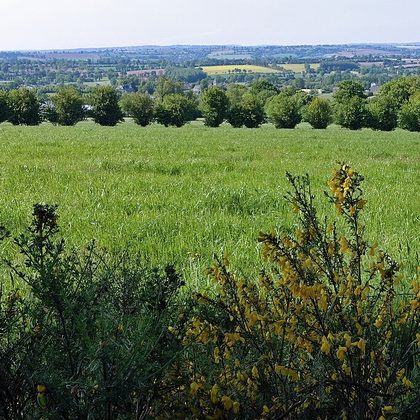
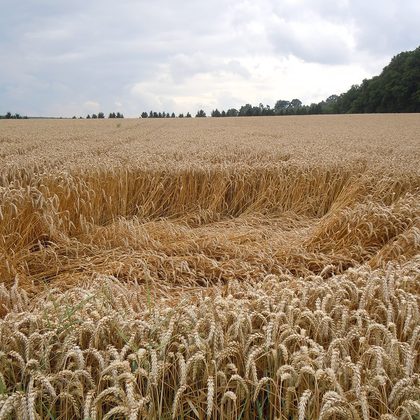
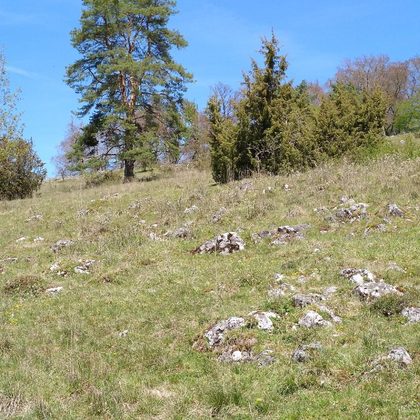
On the breeding grounds, coniferous and mixed woodland, woodland edge, orchards and wooded valleys. European vagrants sit in village gardens at feeders, in hedges and shelterbelts, on stubble with spilt grain, and in coastal scrub and thickets on islands.
Where the bird is most at home, classified with EUNIS — the European standard for habitats.


Range and movements
Breeds from the Urals east through Siberia to Japan and south to the Himalayas; northern birds winter in South-East Asia. Most European records come from Britain and Scandinavia, with a long run of British birds at winter feeding stations. The Netherlands has only a handful, and in Spain the species is effectively unknown.
Where and when to look
November to March, in gardens and farmyards with spilt grain or seed. Work through parties of Collared Doves and pick out the one that looks darker and heavier and stays longer on the ground. Photograph the neck side, the spread tail and the undertail coverts; without those three a record will not get past the committee.
Conservation status
Common and unthreatened across its range, although numbers are falling in parts of East Asia through hunting and forestry. For Europe this is not a conservation question but an identification one: it is a species where one poor photograph decides whether a record stands.