All species › Sandgrouse › Sandgrouse › Pin-tailed sandgrouse
Pin-tailed sandgrouse
Pterocles alchata | Witbuikzandhoen | Ganga ibérica
A squat, pigeon-shaped bird of open dry plains, and one of the classic targets of a trip to the Iberian steppes. It is almost invisible on the ground and usually announced by sound: a chattering flock crossing low and fast, the white belly flashing against the sky.

Voice
The flight call is a dry, nasal, high-pitched katarr-katarr-katarr, with a second variant closer to gala-gala. A passing flock calls almost without a break and the sound carries several hundred metres, so on the plains you nearly always hear the birds before you see them. The Spanish name ganga is taken from this call.
No freely licensed recording is available for this species yet.
Identification
Upperparts ochre to rust, heavily spotted and barred; belly clean white. The central tail feathers are drawn out into two fine needles that trail behind the bird, longer on the male. Males have a green-grey crown, a black throat patch and a narrow chestnut breast band set between two white lines; females are more finely streaked and show three dark lines across the breast. Legs short and feathered, bill small and grey.
Confusion species
The only real confusion is with Black-bellied Sandgrouse, and since both are normally seen in flight it comes down to four features. Belly: clean white here, solid black on Black-bellied, which makes the underside look cut in two. Underwing: white coverts on both, but on Pin-tailed they set off a black trailing edge against otherwise white underparts, while on Black-bellied the white is squeezed between black flight feathers and a black belly. Tail: only Pin-tailed carries the two needle-like streamers, seen as a thin spike behind an otherwise short, pointed tail. And the call, which settles it: Pin-tailed rattles high and dry, Black-bellied rolls low and growling. Structure helps too, Pin-tailed being smaller, faster and sharper-winged, Black-bellied broader and heavier, more like a partridge.
Habitat
Flat, treeless and very open country: dry grassland, fallow, winter cereal on unirrigated land, and the saline flats around inland salt lakes. Tall crops, plantations, slopes and broken stony ground are avoided. Flocks fly to water early in the morning, at cattle troughs, reservoir edges or a pool left in a ditch. The male soaks his belly feathers there and carries the water back to the chicks, which drink it straight from the plumage.
Where the bird is most at home, classified with EUNIS — the European standard for habitats.
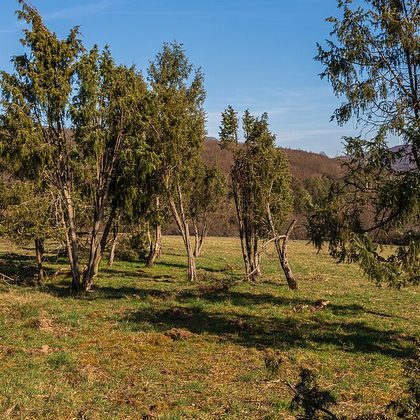
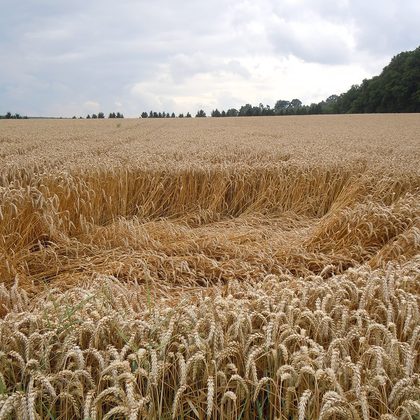
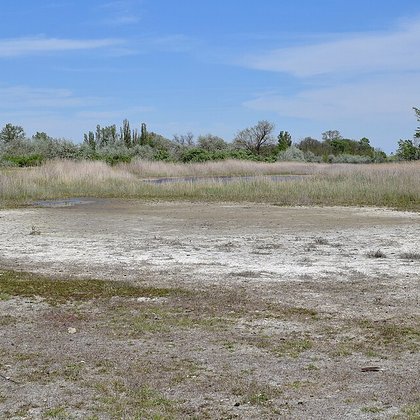
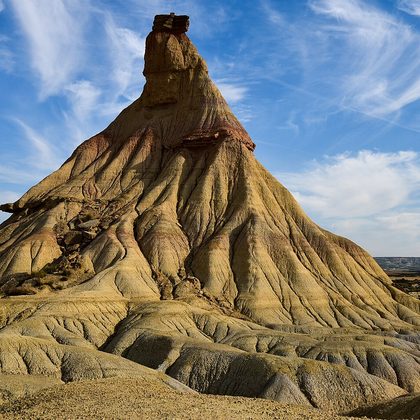
Range and movements
The European stronghold is Spain, with smaller numbers in Portugal and a single isolated French population on the Crau near Arles. Beyond Europe the species breeds across North Africa and from Turkey east through Iran to Kazakhstan. It does not reach Britain or north-west Europe, so seeing one means travelling south.
- Resident
- Breeding (summer)
- Winter
- Passage
- dark = core range, pale = thinly spread
Where and when to look
Be in position at a drinking place on the steppe before sunrise and stay put. Flocks arrive during the first hour of daylight, always calling, and that is when the identification is made. Otherwise drive slowly along field tracks across fallow and scan: on the ground only a moving head or a glimpse of white belly gives the bird away.
Conservation status
Not globally threatened, but listed as vulnerable in Spain, where about 7,700 breeding birds were counted in 2019 after a decline of roughly a fifth since 2005. The French population on the Crau is down to a few hundred birds and is treated as critically endangered there. Loss of fallow, the shift from dry farming to irrigated crops, solar plants on old steppe and disturbance at drinking sites are the main pressures.