All species › Waders, gulls and terns › Plovers and lapwings › Pacific golden-plover
Pacific golden-plover
Pluvialis fulva | Aziatische goudplevier | Chorlito dorado siberiano
The Siberian golden plover: the smallest, leggiest and most golden of the three, and the one most likely to be found in adult plumage. It reaches western Europe in smaller numbers than American Golden-Plover but over a longer season, with birds appearing from late spring through to October.

Voice
A rising, disyllabic chu-wit, remarkably like Spotted Redshank and quite unlike the flat kleep of American Golden-Plover or the clear, mournful tloo of European Golden Plover. Also a softer klu-ee. On many European records the call has come first and the bird has been found afterwards.
No freely licensed recording is available for this species yet.
Identification
The smallest of the golden plovers and the most attenuated, with a small round head, a proportionally long bill and long grey legs on which a good length of tibia is exposed. The upperparts are strongly spangled with deep gold. Breeding adults are black below, but the black is broken by white mottling along the flanks, vent and undertail, and the white neck stripe carries on down the flank instead of ending in a block at the breast. Juveniles and winter birds are warm buff-gold with a yellow-buff supercilium and a finely mottled breast. At rest the tertials are long and reach almost to the wingtip, only two or three primary tips show beyond them, and the wingtip falls level with or barely beyond the tail. In flight the toes project beyond the tail tip.
Confusion species
The armpit decides the bird. European Golden Plover shows white axillaries and a white underwing, American Golden-Plover smoky grey ones, Pacific Golden-Plover grey-brown ones; against the light in flight this is the one character that does not shift with wear, light or moult, and a resting bird with its wings folded frequently cannot be named until it opens them. Against American Golden-Plover, this species has the shorter primary projection, with two or three primary tips beyond the tertials and the wingtip level with the tail, where American shows four or five and a wingtip standing clear of it. The tertials are the other half of the same difference: long here and almost reaching the wingtip, short on American, which is why Pacific looks blunt-winged and American looks stretched. Pacific has the longer tibia and stands higher; American looks bigger-headed and steeper-fronted with a bolder supercilium, Pacific smaller-headed and longer-billed. In breeding plumage the white flank mottling and the white flank stripe of Pacific are diagnostic against the solid black underparts of American. Against European Golden Plover, Pacific is smaller, leggier and much more golden above, and the bulky, short-legged European bird never looks this attenuated.
Habitat
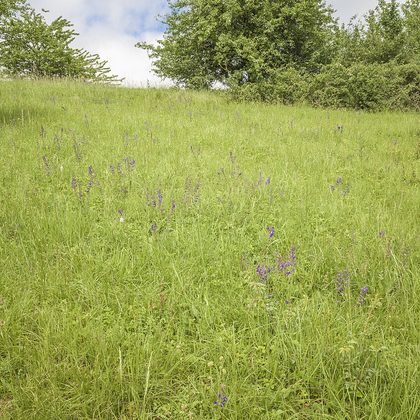
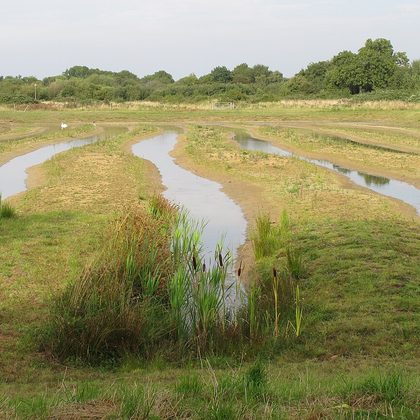
Short grazed grassland, coastal grazing marsh, saltmarsh, the drier edges of estuarine mud and the banks of saltpans, generally in a flock of European Golden Plovers. On the breeding grounds it uses dry lichen and dwarf-shrub tundra, and on passage across Asia it is a bird of paddy stubble and airfields.
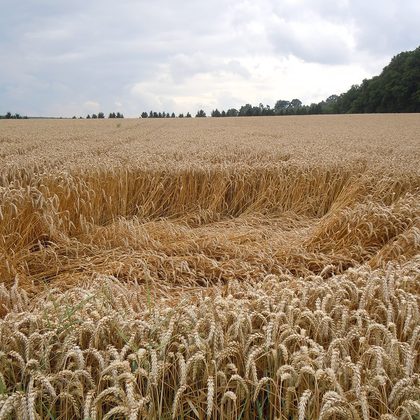
Where the bird is most at home, classified with EUNIS — the European standard for habitats.

Range and movements
Breeds from the Yamal Peninsula east across northern Siberia to western Alaska and winters from East Africa and India to Australasia and the Pacific islands. Small numbers overshoot or drift into western Europe every year, with Britain and Ireland taking most records; spring and midsummer adults are a real feature of the pattern, alongside autumn juveniles.
Where and when to look
Check coastal grazing marsh and saltmarsh flocks from August to October, and do not write off the summer: an adult in worn breeding plumage in June or July is a classic way for this species to appear. Pick out the small, leggy, very golden bird that looks short-winged, then get it airborne for the axillaries and the projecting toes.
Conservation status
Not of conservation concern, with a large breeding range and a very large population. The clearest pressure is the continuing loss of intertidal staging areas around the Yellow Sea, which affects the whole East Asian flyway and is being watched closely for waders that share the route.