All species › Waterfowl › Ducks, geese and swans › King eider
King eider
Somateria spectabilis | Koningseider | Eider real
A heavy sea duck of the high Arctic whose drake carries an orange bill knob that shows up at a kilometre. A few reach British waters each winter, almost always inside an Eider flock; in arctic Norway they are part of the standard winter scene.

Voice
Displaying drakes give a soft, dove-like three-note cooing, oo-oo-ooh, that carries far over calm water; the female croaks low and hoarse, and low quacking notes are given in flight. Around the North Sea the species is silent in practice, but display parties in the Norwegian fjords are audible from March.
No freely licensed recording is available for this species yet.
Identification
The adult drake has a blue-grey crown and nape, a pale green cheek, a red bill with a large orange, black-edged frontal knob, a cream-white breast and otherwise black underparts, with two upright black sails of elongated scapulars on the back. The female is warm brown with black horseshoe markings on flanks and back and a short, upturned bill. First-year males are dark brown with a dingy white breast and an orange bill without the knob; full adult plumage takes three years.
Confusion species
Eider is the only real comparison, and with females and young males it all comes down to head profile. On Eider the forehead and bill run on in one long straight line, with the feathering reaching forward in two narrow wedges. King Eider has a shorter, higher, rounder forehead with a clear step down to the bill, and the feathering border along the side of the bill curves in an S rather than running straight. Females also show horseshoes on the flanks instead of barring. The adult drake carries a sharp black V on the throat; young males often still show it and females at best a faint dark throat line, but at close range it is the quickest mark of all.
Habitat
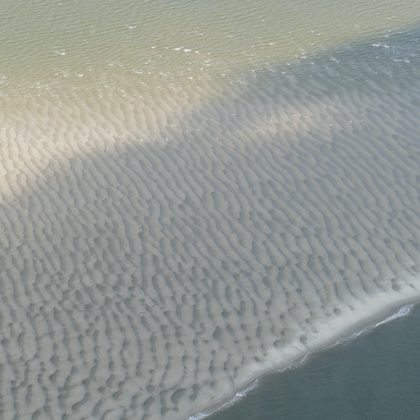
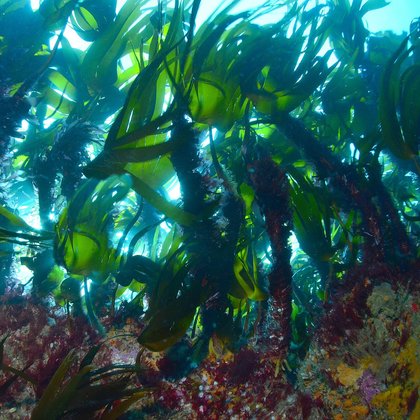
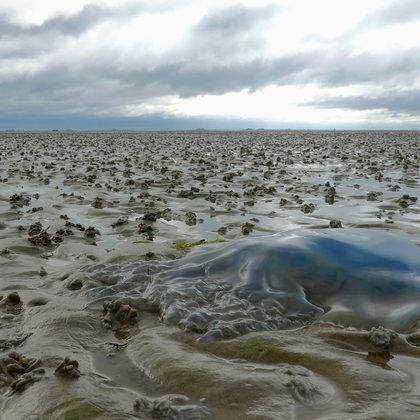
A sea duck of deeper inshore water than Eider, diving to several tens of metres for mussels, snails, crabs and echinoderms over sand and gravel and along rocky coasts. In winter it favours tide races, harbour mouths and groynes, usually in the middle of an Eider flock. It breeds beside freshwater pools on arctic tundra, ground the bird never visits outside the nesting season.
Where the bird is most at home, classified with EUNIS — the European standard for habitats.
Range and movements
A circumpolar breeder of the high Arctic, wintering in the Bering Sea, off west Greenland, eastern Canada and arctic Norway; Varanger, with Vadsø, Vardø and Båtsfjord, is the reliable European site. Further south it is a scarce vagrant. Several winter in Britain most years, usually in northern Scotland and the northern isles among Eider flocks, and the first record came from Orkney in 1832. Individuals often return to the same stretch of coast for several winters.
- Breeding (summer)
- Winter
- Passage
- dark = core range, pale = thinly spread
Where and when to look
In arctic Norway watch from the quays at Vadsø and Båtsfjord between November and April, where King Eiders dive below you alongside Steller's Eiders and Long-tailed Ducks. In Scotland, work Eider flocks off Orkney, Shetland and the Moray Firth in January and February for a bird with a shorter, higher head profile; brown first-year males with an orange bill but no knob are the ones most often overlooked.
Conservation status
Not globally threatened, with a population in the hundreds of thousands, though numbers on the western Nearctic side fell sharply in the second half of the twentieth century. The pressures are oil pollution in the concentrated wintering areas, drowning in set nets, hunting and bycatch, and shifting sea ice that changes access to the shellfish beds.