All species › Passerines › Swallows and martins › Bank swallow
Bank swallow
Riparia riparia | Oeverzwaluw | Avión zapador
Europe's smallest hirundine and the only one that digs its own nest: a burrow a metre deep in a steep sand face, with tens to hundreds of neighbours around it. Its numbers move with the rains in the Sahel, and can halve or double from one year to the next.

Voice
A dry, rasping tschrrp or trrrt, hard and without musical tone, repeated constantly in flight and at the nest face. Over a colony hundreds of these calls merge into a continuous rustling grate audible from a distance. The song is a short scratchy version of the same, given from the mouth of the burrow or in flight.
Recording: Pascal Christe — CC BY-SA 4.0 · Wikimedia Commons
Identification
Small, dull brown above and white below, with a sharply defined brown breast band separating the white throat from the white belly — the only feature you need. The tail is short and barely forked, and the rump is brown with no white at all. The flight is low, fluttering and jerky, full of short turns just above the water, quite unlike the smooth gliding of a Barn Swallow. Sexes alike.
Confusion species
House Martin is blue-black with a big white rump and entirely white underparts, with no breast band. Juvenile Barn Swallows are the classic pitfall: cream to dull rusty throat, a dark but usually incomplete breast band, blue gloss on the upperparts and a longer, more clearly forked tail. Crag Martin, in Spain, is bigger and heavier, uniform brown-grey with a dingy throat and no clean band, and shows white spots in the spread tail. Swift is far larger and wholly dark.
Habitat
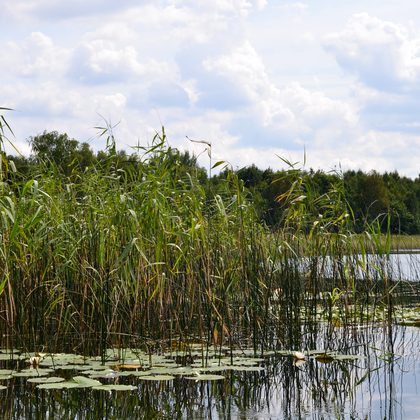
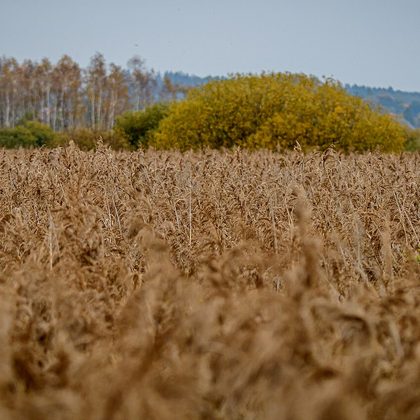
Steep bare sand faces and cut banks along rivers, sand quarries, dyke works and spoil heaps, always within reach of open water or wet grassland to hunt over. Where natural banks are missing it makes do with temporary sand piles and with artificial nesting walls. Outside the breeding season it roosts in large numbers in reed.
Where the bird is most at home, classified with EUNIS — the European standard for habitats.


Range and movements
One of the most widely distributed passerines in the world, from North America across Europe into Asia. In the Netherlands a numerous but strongly fluctuating breeder, with colonies in sand workings along the big rivers and in the Delta. In Spain it breeds locally in the cut banks of the Ebro, the Duero and other river plains, and in autumn large numbers of northern birds pass through the peninsula. Winters in the Sahel and West Africa.
- Breeding (summer)
- Winter
- Passage
- Migration direction
- dark = core range, pale = thinly spread
Where and when to look
Late April and May at a sand quarry or a fresh cut bank: stand well back so the birds keep coming and going, and count the occupied holes. In August thousands of Sand and Barn Martins gather over reedbeds at dusk before dropping in; an hour before sunset on a dyke gives the finest spectacle of the year.
Conservation status
Not globally threatened, but subject to enormous annual swings: after a dry year in the Sahel the European population can collapse, then recover within a few good years. In the longer term, the fixing and armouring of river banks and the loss of natural cut faces work against it. Artificial nesting walls and cutting a fresh face into sand heaps each year work strikingly well.