All species › Passerines › Grasshopper warblers › Common grasshopper-warbler
Common grasshopper-warbler
Locustella naevia | Sprinkhaanzanger | Buscarla pintoja
A mouse-like skulker you will hardly ever see, betrayed by a sound that scarcely resembles a bird at all: minutes of continuous reeling like a sewing machine or a fishing line being run out. To see one you must stand still at dusk and be patient.

Voice
The song is a high, dry, mechanical reel on one pitch, like a sewing machine or a grasshopper: a sustained srrrrrrrrrrrrrrrr that can run for one to five minutes without a break. What makes it distinctive is that the sound comes and goes: the bird turns its head from side to side as it sings, so the volume swells and fades and the song seems to come from close by and far off at once — one of the hardest sounds to walk in on. Against Savi's it is higher, drier, faster and thinner. Heard mainly from half an hour after sunset deep into the night and again at first light, from mid-April into June.
Recording: Tommy Andriollo — CC BY-SA 4.0 · Wikimedia Commons
Identification
Olive-brown to olive-green above with fine dark streaks on crown, mantle and scapulars, and off-white to buff below. The clinching feature is under the tail: the long undertail coverts are clearly dark-streaked. The tail is long, broad and graduated, the supercilium vague and the legs pale pink. It walks and climbs mouse-like through vegetation and rarely flies more than a few metres.
Confusion species
Savi's Warbler is the counterpart: uniform red-brown with no streaking, plain undertail coverts, and a lower, fuller and more even reel. Sedge Warbler has a streaked crown with a broad creamy supercilium, a rusty rump and an erratic scratchy song full of mimicry. River Warbler is bigger, plainer dark brown with a grey breast wash and sings in a slower clicking rhythm. Blyth's Reed Warbler is warmer brown and unstreaked.
Habitat
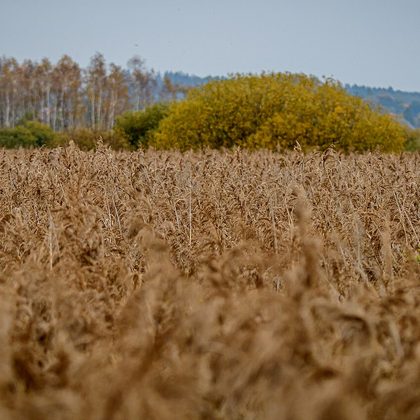
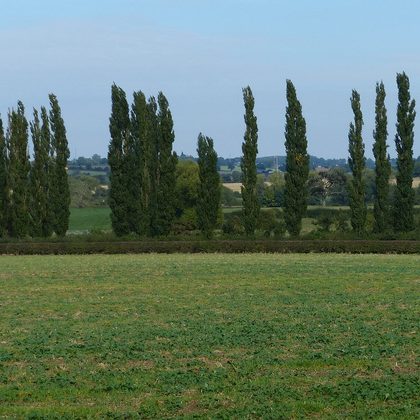
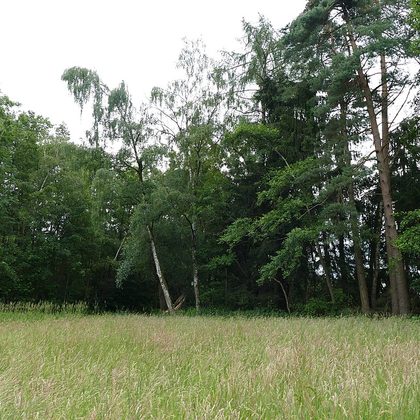
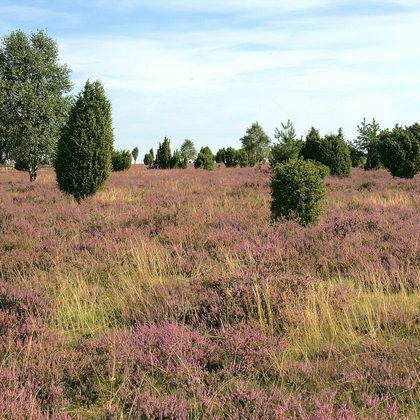
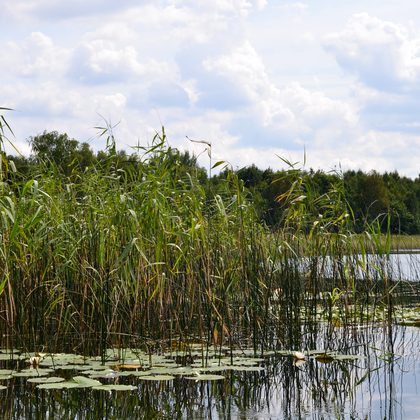
Low, dense, rank vegetation with an open floor: wet rough ground with reed and sedge, infilling fen margins, young forestry plantations and clear-fells, heath with purple moor-grass, set-aside and dyke slopes. It needs no open water, only structure and cover right down to the ground.
Where the bird is most at home, classified with EUNIS — the European standard for habitats.
Range and movements
From Ireland and Iberia east to Central Asia. In the Netherlands a scarce but widespread breeder of marshy rough ground, young plantations and damp dune slacks, concentrated in Flevoland, the Delta and the north. In Spain it breeds only in the north — Cantabria, the Pyrenees and the north-west — and is otherwise a scarce migrant. Winters in West Africa.
- Resident
- Breeding (summer)
- Passage
- dark = core range, pale = thinly spread
Where and when to look
Late April and the first half of May, from half an hour after sunset. Find a rank field or wet rough ground along a dyke, stand still and listen; do not walk at the sound but wait until you can cross-bear it from two positions. Cool, windless evenings produce the longest bouts, and after half an hour a male will sometimes climb briefly to the top of a tall stem.
Conservation status
Not globally threatened; European numbers fluctuate strongly and track the supply of young, rank vegetation. Early and blanket mowing, the straightening and clearing of ditch banks and the rapid closing over of clear-fells cost it ground, while new wetland creation and fallow land can produce large temporary concentrations.