All species › Waders, gulls and terns › Sandpipers and snipes › Pin-tailed snipe
Pin-tailed snipe
Gallinago stenura | Stekelstaartsnip | Agachadiza colicorta
A snipe with what look like needles set into the tail: the outer six to nine pairs of rectrices are reduced to stiff pins less than two millimetres wide. It breeds just inside the north-eastern edge of Europe and, west of that, is about as hard a vagrant as the Western Palearctic offers.

Voice
On flushing a short, dry, slightly hoarse tetch, lower and quieter than Common Snipe's tearing note and carrying much less far. In display, males fly in loose groups over the marsh and let the stiff outer rectrices buzz in the dive: a high, shrill, whining sound quite unlike the soft bleat of Common Snipe.
No freely licensed recording is available for this species yet.
Identification
Slightly smaller and more compact than Common Snipe, with a noticeably shorter bill and a short tail barely reaching past the wing tips, so the toes project clearly beyond it in flight. The upperparts are more finely vermiculated and less contrasting, with narrower and duller cream braces. On the closed wing a pale panel of cream-white spots stands out across the lesser and median coverts. The wing looks blunter at the tip and the flight is slower and heavier.
Confusion species
Against Common Snipe: the secondaries lack the bold white trailing edge, keeping at most a faint line; the underwing is evenly and densely barred with no pale flash; the bill is clearly shorter; and the toes project past the tail in flight. Against Great Snipe: that bird is larger and heavier, with white tail corners and three rows of white feather tips across the coverts, where Pin-tailed shows a plain cream panel and no white in the tail. The pin rectrices settle it, but they can only be counted on a good photograph of a spread tail.
Habitat
Breeds in wet hay meadow, sedge marsh and bog in taiga and forest tundra, and in mountains up to two and a half thousand metres, tolerating drier ground than Common Snipe. On the wintering grounds it uses rice fields, wet arable, marsh edges and damp grassland, often in places a Common Snipe would find too dry.
Where the bird is most at home, classified with EUNIS — the European standard for habitats.
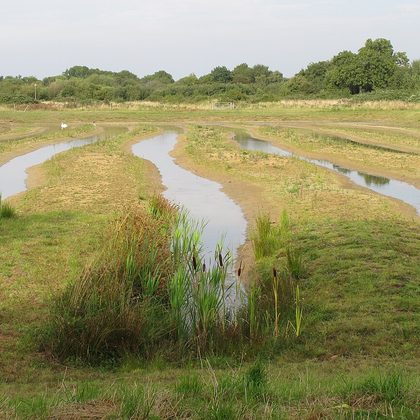
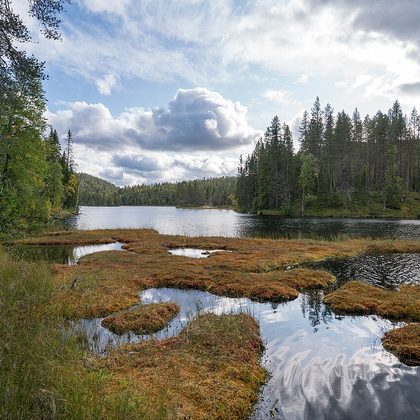
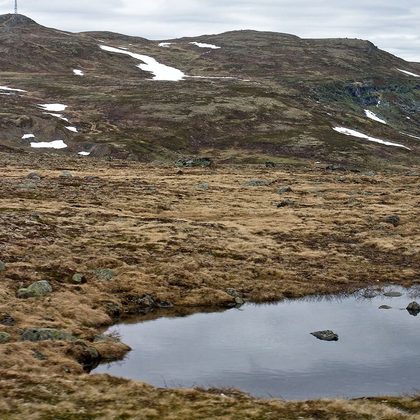
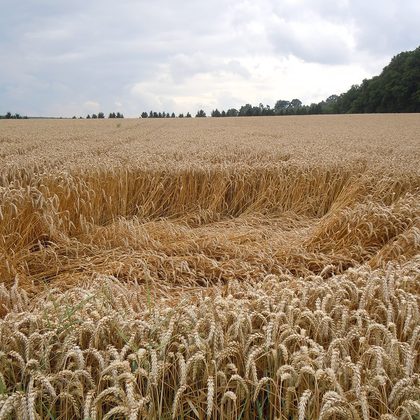
Range and movements
Breeds in northern Russia from the Pechora basin and the Urals east through Siberia to the Sea of Okhotsk, with only the western end of that belt inside Europe. Winters from India and Sri Lanka through South-East Asia to the Philippines. West of the Urals it is a major rarity, with most records in the Middle East and only a handful in north-west Europe.
- Winter
- Passage
- dark = core range, pale = thinly spread
Where and when to look
Nearly every Western Palearctic record starts with a snipe that flushes wrongly: low, slow, without the zigzag, and calling in a way that does not fit. Photograph that bird at once, both as it lifts and as it drops in, because the underwing and the projecting toes are exactly the characters you can check afterwards. Israel and Oman offer the best odds, in November and December along irrigated fields and fish ponds.
Conservation status
Least Concern. The breeding range is vast, thinly settled and largely out of reach of farming and drainage, and the world population is regarded as stable. Drainage of wetlands and hunting press on numbers locally on the South Asian wintering grounds, but there is no sign of a broad decline.