All species › Swifts › Swifts › Pallid swift
Pallid swift
Apus pallidus | Vale gierzwaluw | Vencejo pálido
The Pallid Swift is the swift of the southern town: it nests under the same eaves as the Common Swift and hunts over the same squares, but arrives weeks earlier and stays well into the autumn. Separating it from a Common Swift is one of the finest identification problems in Europe.

Voice
A scream that sounds lower and fuller than the Common Swift's and usually breaks into two parts: srreee-rree, with a clear step in pitch, against the higher, sustained srreee of the commoner bird. Parties call around the colony until late dusk, and in the south still in October, long after the Common Swift has gone.
Recording: Xavier Riera — CC BY-SA 4.0 · Wikimedia Commons
Identification
Almost the same size as a Common Swift but earth brown rather than sooty black; in full sun the plumage has the colour of dried mud. The pale throat patch is large, diffusely edged and runs down onto the breast, and it stands out against a dark eye mask that shows up against the paler forehead. Below, pale feather fringes give a scaly look. Above, the mantle is the darkest part of the bird and contrasts with the paler head and rump and above all with the pale panel formed by the secondaries and inner primaries; the outer primaries are distinctly darker. The body looks a little fuller, the wing broader at the base and blunter at the tip, and the tail fork is shallower. Wingbeats are a fraction slower and more elastic, with longer glides.
Confusion species
Common Swift is the real problem, and no single feature works on its own. It is blacker and looks black against the sky, has a smaller and less well defined throat patch, a head without a sharp eye mask, mantle and primaries of more even tone, a narrower wing base, a slightly deeper tail fork and faster, more flickering wingbeats; its scream is higher and on one note, while the Pallid's is lower and disyllabic. A worn Common Swift in July can look brown and scaly in strong light, and then only the whole picture decides — tone, mantle against primaries, head pattern and voice. Many birds passing overhead honestly cannot be named, and that is the nature of the pair rather than a failure of the observer. Pacific Swift has a white rump band and a long, deeply forked tail. Alpine Swift is far bigger and has a white belly.
Habitat
Nests in buildings — under roof tiles, in putlog holes and gaps in old facades, in churches, forts and town walls — and also in natural crevices on sea cliffs, coastal rocks and inland cliffs and gorges. Feeds over old town centres, coastal cliffs, steppe, reservoirs and river plains, high in fine weather and low over water in rain.
Where the bird is most at home, classified with EUNIS — the European standard for habitats.
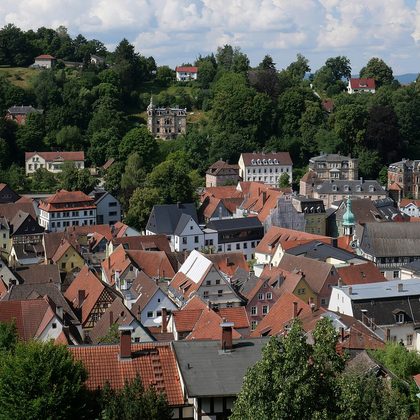
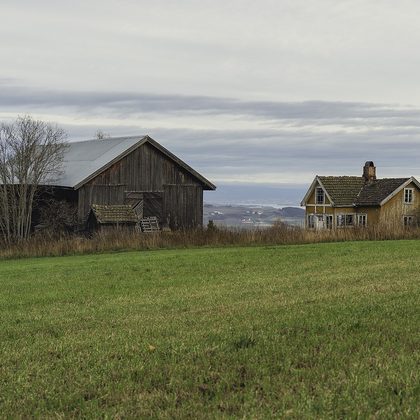
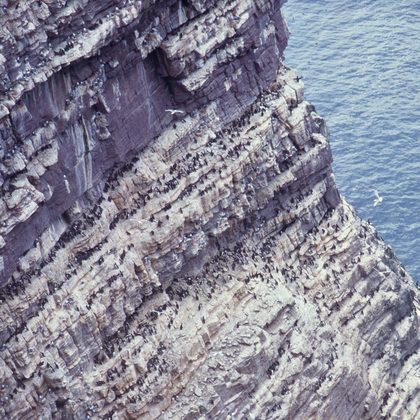
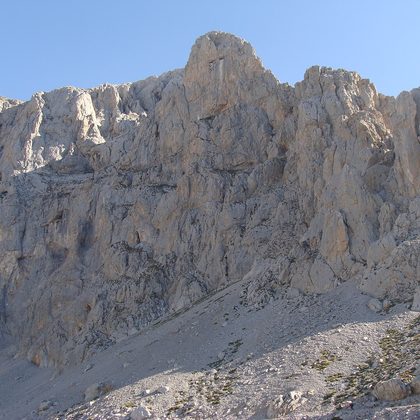
Range and movements
A breeding bird of the Mediterranean, North Africa, the Middle East and the Canaries and Madeira, with a range reaching east to Pakistan; it winters in Africa south of the Sahara. In Spain it occupies the southern half of the peninsula, the Mediterranean coast and both archipelagos, and it proves to be more widespread inland than was long assumed. In Britain and the Netherlands it is a rare vagrant, with most records in October and November, so a late swift over the coast always deserves a second look.
- Breeding (summer)
- Winter
- Passage
- Migration direction
- dark = core range, pale = thinly spread
Where and when to look
The two are easiest to compare side by side in an Andalusian town in March: the Pallid Swift has been in for some weeks, the Common Swift is just arriving, and over the same square colour, head pattern and voice can be judged against each other. Simpler still is October and November: once the Common Swift has left Europe, almost any swift over a southern town is a Pallid. Stand by the cathedral or the town wall with the sun behind you, because the colour difference disappears against the light.
Conservation status
Not threatened (IUCN: Least Concern), with a large world population and a range that has grown rather than shrunk in recent decades; towns in Italy and Spain well north of the old limit are now occupied. The threats are those of the Common Swift: renovation and cavity insulation close off holes under roofs and behind facing stones, and the supply of flying insects is falling. Nest bricks and keeping existing holes open when old buildings are restored work here too.