All species › Gamebirds › New World quail › Northern bobwhite
Northern bobwhite
Colinus virginianus | Virginiaanse boomkwartel | Colín de Virginia
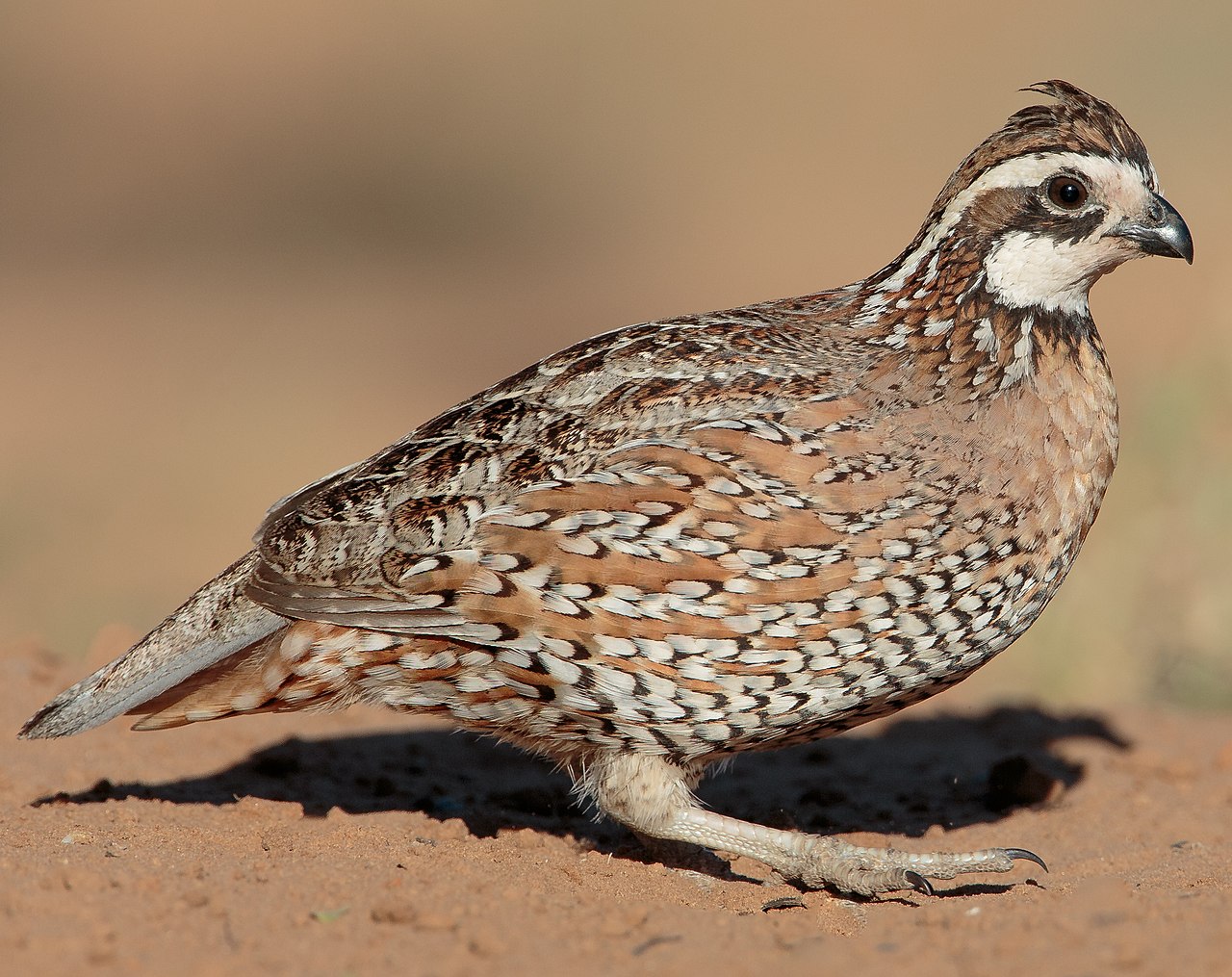
A North American quail that exists in Europe only because it was released. Where it holds on, chiefly on the plains of northern Italy, the male gives itself away with a clear two-note whistle from a post, a fence wire or a stone, often in the middle of the day.
Voice
The name is the call: a clear rising bob-WHITE, often preceded by a soft introductory note, delivered from a post or a fence. Males call from April into August, including in full midday heat. Scattered covey members regather with a soft, swelling hoy-lee, and an alarmed bird gives a sharp pit-pit before the whole party runs into cover.
Recording: G. McGrane — Public domain · Wikimedia Commons
Identification
Small, round and short-tailed, clearly smaller than a Grey Partridge, with a short black bill and no head plume. The male has a white throat and white supercilium, both sharply outlined in black, and a red-brown crown that can be raised into a low crest. The underparts are cream with black horseshoe-shaped scaling; the upperparts are red-brown with black blotches and cream feather edges. The female repeats the same head pattern in dull buff rather than black and white. Flushed birds explode away on whirring wings and drop back into cover within fifty metres.
Confusion species
The only realistic confusion in Europe is Common Quail (Coturnix coturnix): smaller, streaked buff rather than scaled, without the black-and-white face, and flying off low and long-bodied on fast, flat wingbeats. Grey Partridge is bigger, grey-breasted, with an orange-brown face and no white supercilium. Where California Quail has also been released, that species shows a black forward-curling head plume and a scaled belly with a chestnut centre.
Habitat
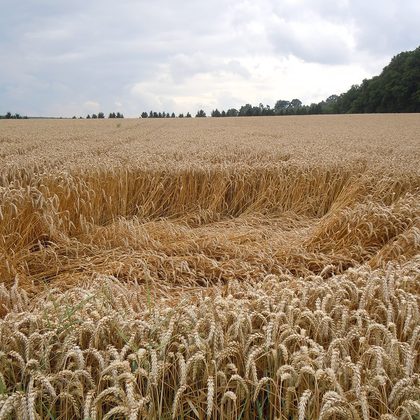
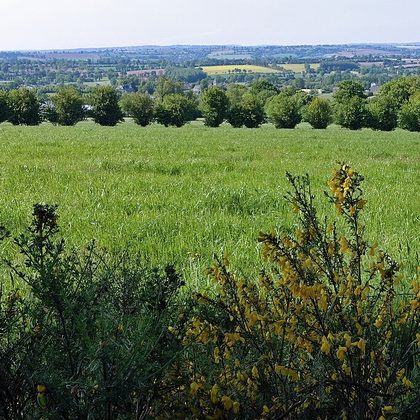
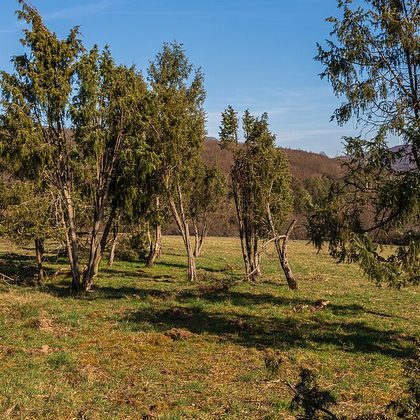
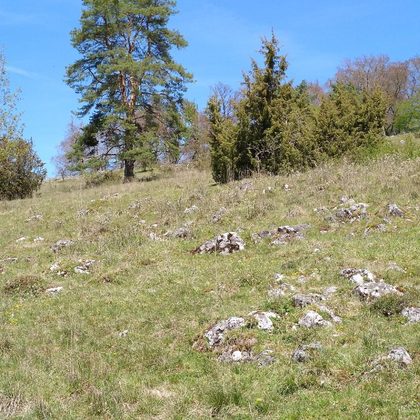
Mosaics of low cover and bare ground: rank field margins, fallow, hedge bottoms, rough grazing and the edges of vineyards and orchards. Birds feed by walking the open patches and dive into the scrub when disturbed, so cover without bare soil beside it is useless to them. Closed woodland, wet ground and high mountains are avoided.
Where the bird is most at home, classified with EUNIS — the European standard for habitats.
Range and movements
The natural range covers eastern and central North America and Mexico. Everything in Europe goes back to released birds: stock put down for shooting holds on locally on the plains of northern Italy, with smaller pockets in the Balkans. French and other records involve single released or escaped birds that rarely survive a winter. There is no continuous European range, and most national committees treat the species as introduced.
- Resident
- Breeding (summer)
- dark = core range, pale = thinly spread
Where and when to look
Drive slowly through small-scale farmland on the Po plain in May or June and stop at every whistle; the call carries a long way over open ground. The birds walk rather than fly, so scan verges, the bare strip along a crop and the base of hedges. Away from the established pockets, log any European sighting as a released or escaped bird.
Conservation status
Assessed as Near Threatened worldwide: North American numbers have fallen steeply within a few decades through agricultural intensification, the loss of rough margins and the loss of early successional cover. The European birds form small, fragmented groups dependent on continued releases and on untidy field edges. They carry no legal protection here and are excluded from European species lists.