All species › Waders, gulls and terns › Sandpipers and snipes › Little curlew
Little curlew
Numenius minutus | Kleine regenwulp | Zarapito chico
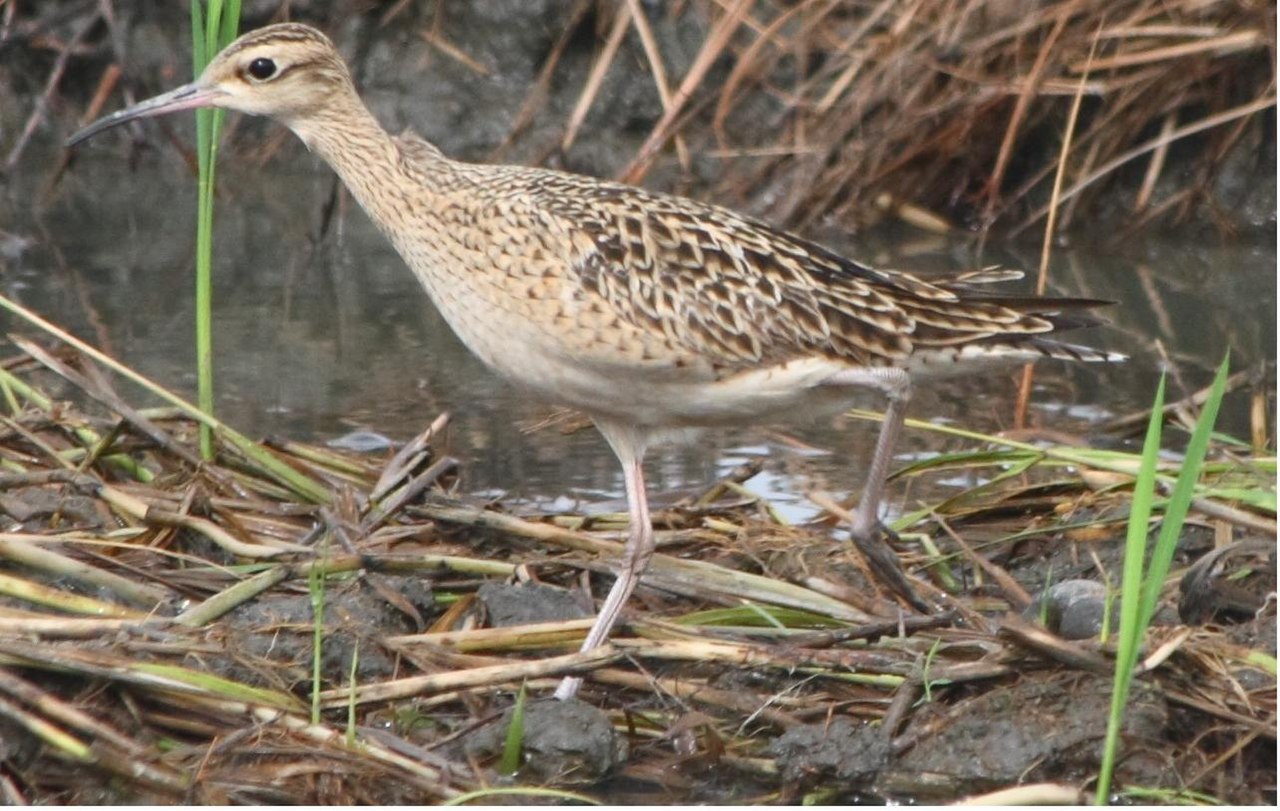
The smallest curlew in the world, barely bigger than a Golden Plover and with a bill that is almost short for the family. A bird of dry short grass and burnt ground rather than estuaries, and one of the rarest Siberian vagrants to reach Europe.
Voice
A fast, hard chew-chew-chew of three or four syllables, shriller and more grating than Whimbrel's whistled rattle and without its even, cheerful quality. Flushing birds also give a rising chee-oo, and excited birds a short trill. Anyone who knows Whimbrel by ear hears at once that something is wrong: the same shape of call, pitched higher and delivered rougher.
No freely licensed recording is available for this species yet.
Identification
Small and slight, with a long thin neck, a rounded head and warm sandy-buff upperparts scaled and streaked with dark brown. The bill is only three to four centimetres, fine, and curves only over the last section, with a dull pink base to the lower mandible. The head shows dark lateral crown stripes with a narrow pale central stripe and a weak eye-stripe, a softer pattern than Whimbrel's. Breast and flanks are buff with fine streaking, the belly white. The legs are pale: greyish-pink to flesh. In flight it looks pointed and fast, more plover than curlew, with a plain brown rump lacking any white wedge and a plain sandy underwing with no barring.
Confusion species
Whimbrel is the only serious confusion species. Size comes first: at twenty-eight to thirty-two centimetres Little Curlew is a third shorter, and in the field it reads as a Golden Plover with a curlew's bill rather than as a small curlew. It shares the striped crown, but the pale central stripe is narrower and duller, the stripe behind the eye is barely there, and the whole head looks softer and less contrasty. The bill is the clearest character: three to four centimetres, fine, curved only at the tip and pale at the base, against Whimbrel's much longer bill with its distinct kink two-thirds along. Leg colour is what holds up at range: pale greyish-pink to flesh on Little Curlew, dark blue-grey on Whimbrel. In flight Little Curlew also lacks the white back wedge of European Whimbrel, and its underwing is uniformly sandy rather than finely barred.
Habitat
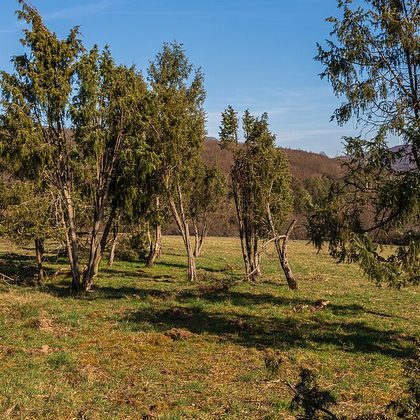
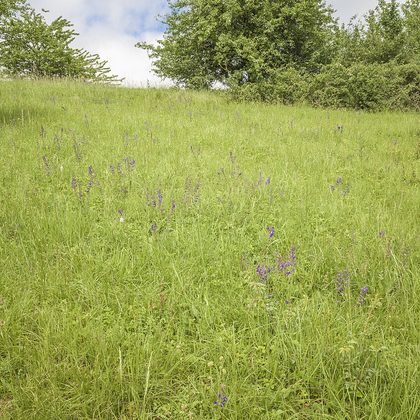
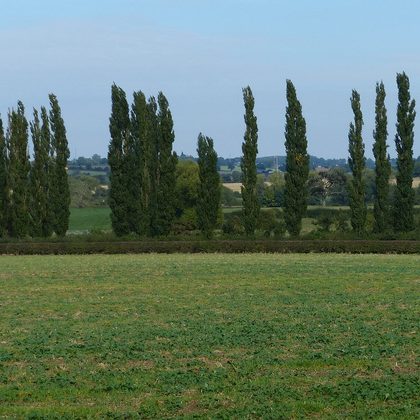
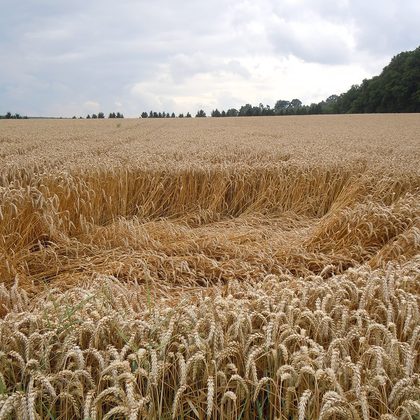
Unlike most waders it seeks dry ground. Closely grazed grassland, stubble, ploughed fields, burnt plains, playing fields and even lawns, usually near water but not in it. It takes insects, above all grasshoppers and beetles, running and stopping and picking in plover fashion. Breeds in north-east Siberia on open slopes and burnt clearings in larch and birch taiga, along the headwaters of small rivers.
Where the bird is most at home, classified with EUNIS — the European standard for habitats.
Range and movements
Breeds in a small area of north-east Siberia and winters in northern Australia, moving through China, Japan, Indonesia and New Guinea. Europe lies entirely off that route and accepted records can be counted on one hand. Britain has two, both in late August: Sker Point, East Glamorgan, in 1982 and the Blakeney to Salthouse stretch of Norfolk in 1985. The Netherlands has a single record, and an unusual one: a bird in the northern tip of Noord-Holland, around Hollands Kroon and Schagen, from 23 December 2019 to 18 January 2020, one of the first midwinter records anywhere in the northern hemisphere. Spain has none.
Where and when to look
Do not expect to find it on the shore. The Dutch bird fed on arable fields and short grass leys among Lapwings and Golden Plovers, and that is the picture to hold: a small, warm sandy wader with a curved bill behaving like a plover in a flock of plovers. In late summer and autumn scan short-grass fields and freshly harvested ground behind the coast, and check size and leg colour on any odd Whimbrel. If it comes off, patience is rewarded: these birds feed steadily, stay put and are often available for days or weeks.
Conservation status
Least Concern. The world population is put at well over a hundred thousand birds, and outside the breeding season it concentrates in a small part of northern Australia, locally in flocks of thousands. That concentration is the vulnerability. Loss of intertidal flats around the Yellow Sea, where the birds refuel on migration, is the central problem for every wader on this flyway. On the Australian grasslands, conversion to intensive agriculture and altered fire regimes also count. The Siberian breeding grounds are remote and so far little affected.