All species › Waders, gulls and terns › Plovers and lapwings › Gray-headed lapwing
Gray-headed lapwing
Vanellus cinereus | Grijskopkievit | Avefría cabecigrís
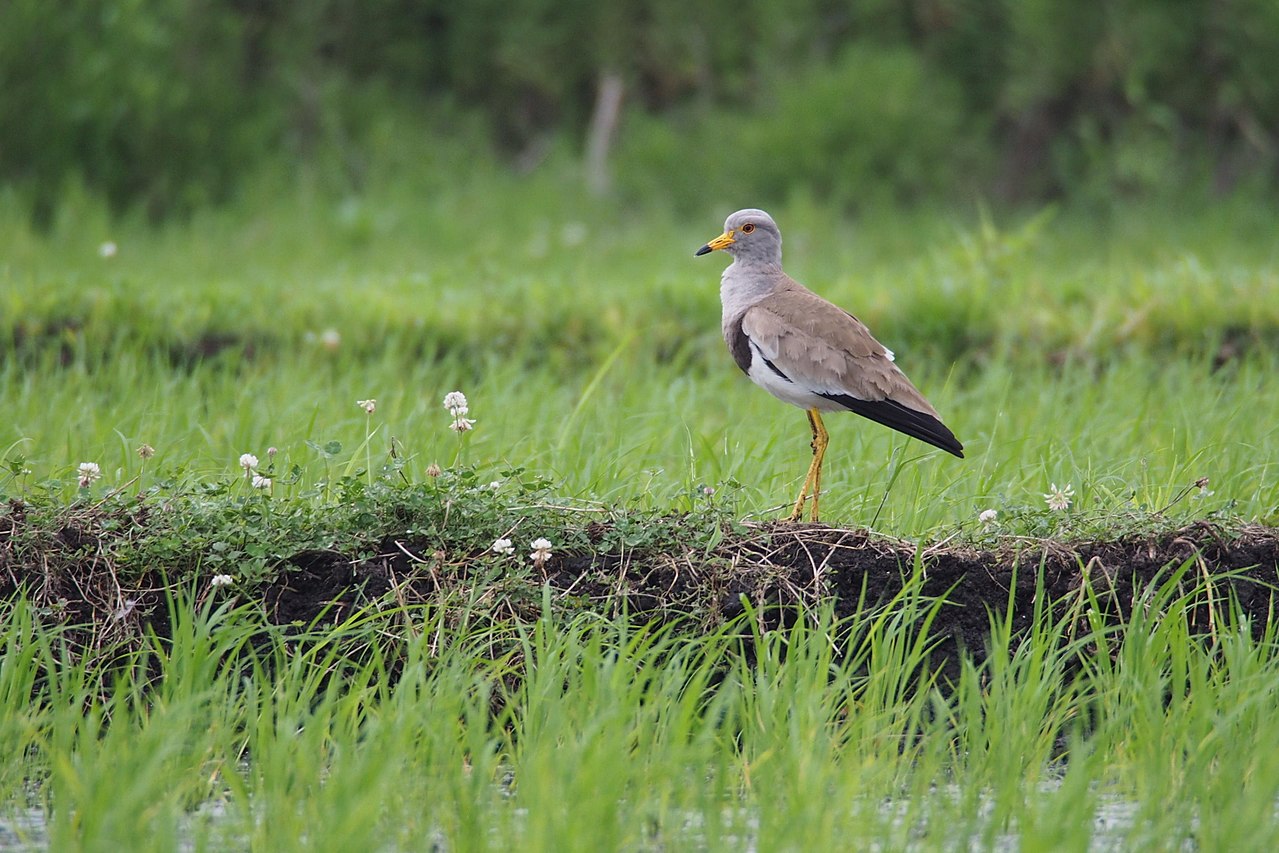
A large East Asian lapwing with a grey hood, yellow legs and a black breast band. Until recently a name from the Asian handbooks; since a bird spent several days on a Northumberland pasture in spring 2023 it belongs in a European guide.
Voice
A sharp, high chee-it given in flight and in alarm, more penetrating than the plaintive note of Northern Lapwing. As the bird becomes agitated this runs into a hurried kri-ri-ri-ri, and on the breeding grounds a plaintive, repeated kree-it. Outside the breeding season the species is fairly quiet, so do not expect a vagrant to call you over to it.
No freely licensed recording is available for this species yet.
Identification
Larger than Northern Lapwing and distinctly longer-legged, without a crest. Head, neck and upper breast are plain grey, cut off sharply by a narrow black band across the lower breast; below that the bird is white. The upperparts are an even coffee brown, the rump white and the tail white with a broad black terminal band. The bill is yellow with a black tip, the orbital ring yellow and the iris red-brown; the legs are long and yellow. In flight the pattern is bold and simple: brown coverts, gleaming white secondaries and black primaries, with a white underwing. Juveniles are browner about the head and show a faint or absent breast band.
Confusion species
Nothing in Europe repeats this combination. Northern Lapwing is crested, has short reddish legs and a black breast without a grey hood. Sociable Lapwing is smaller, sandy brown, striped about the head and black-legged. The nearest thing is White-tailed Lapwing, which also has long yellow legs, but it is smaller, pale buff on head and breast, lacks the black breast band and has an all-white tail. Faced with a grey-hooded, yellow-legged lapwing, the things to confirm are the breast band and the yellow bill base.
Habitat
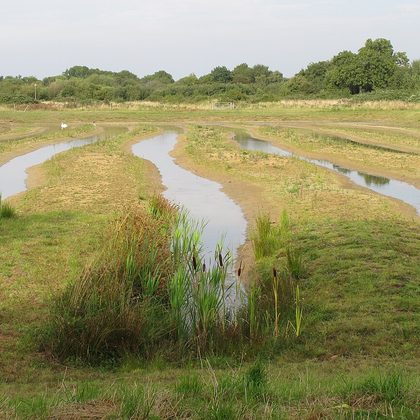
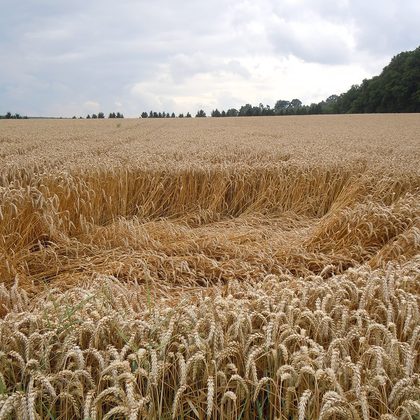
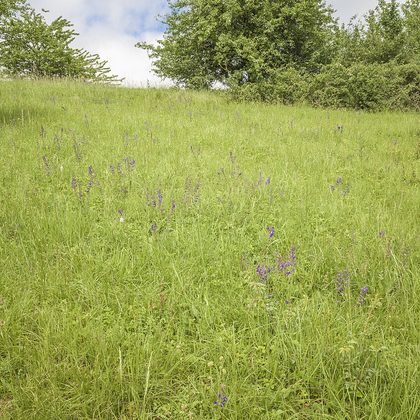
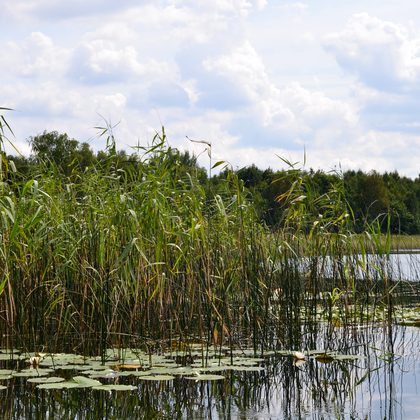
On the breeding grounds wet grassland, rice fields and marsh edges; outside the breeding season also drying margins and irrigated land. A European vagrant is to be expected wherever Lapwings stand: damp short grassland, wet meadows, shallow floods and bare arable. It feeds by walking and standing with short runs, and like at home it keeps close to shallow water.
Where the bird is most at home, classified with EUNIS — the European standard for habitats.
Range and movements
Breeds in north-east China, the Russian Far East and Japan, wintering from north-east India to Cambodia, with part of the Japanese population staying on Honshu. Vagrants are on record from South-East Asia and Australia and, on the western side of the range, from Russia. For Europe there is a handful of records, including Sweden and the first for Britain, in Northumberland in spring 2023. As with other East Asian waders, the tally can be expected to creep upwards.
Where and when to look
This is not a species you go looking for; it is one you travel to. Even so, working through big Lapwing flocks on wet meadows and floods in May and June is worthwhile, since that is the company a vagrant would keep. If news breaks, expect a mobile bird moving between fields; scan the fringe of the wettest ground and watch for the yellow legs, which show up in short grass at a considerable distance.
Conservation status
Least Concern globally, with a range in East Asia that is growing rather than shrinking; in Japan the species spread north through the twentieth century. Locally, drainage of wet grassland, intensified rice growing and urban expansion push numbers down. For Europe the species is chiefly a measure of how far East Asian waders can wander.