All species › Pelicans, herons and ibises › Ibises and spoonbills › Glossy ibis
Glossy ibis
Plegadis falcinellus | Zwarte ibis | Morito común
At a distance the Glossy Ibis looks like a dark, crow-sized bird with a long curved bill. In side light it turns out to be deep chestnut, with a green and purple metallic sheen across the wings and back. It walks in loose parties through shallow water, probing between the mud and the stems.

Voice
Mostly silent. At the colony and when flushed it gives a low grunting graa and a series of hoarse kreh-kreh notes that suggest a pig more than a bird. Outside the breeding season feeding flocks produce no more than a soft muttering.
Recording: Sudipto Roy — CC BY-SA 3.0 · Wikimedia Commons
Identification
A medium-sized dark wader with long legs and a long, evenly decurved bill; the silhouette identifies it before any colour does. In breeding plumage the body is deep chestnut, with a green and purple gloss over wings and back that only shows in good light, and a thin blue-white line borders the bare facial skin without continuing over the crown. In winter plumage the head and neck are finely streaked white and the bird looks much duller. In flight it stretches neck and legs and alternates quick wingbeats with short glides, usually travelling in lines or a loose V.
Confusion species
Eurasian Spoonbill belongs to the same family but is white, with a straight bill broadened at the tip. Curlew has an equally decurved bill but is streaked brown, shows a white rump and flies with slower, gull-like beats. At long range a flying flock can suggest cormorants; those have a straight hook-tipped bill, a heavier head and a longer tail. In France and Italy the African Sacred Ibis shares the same pools, but that bird is white with a bare black head.
Habitat
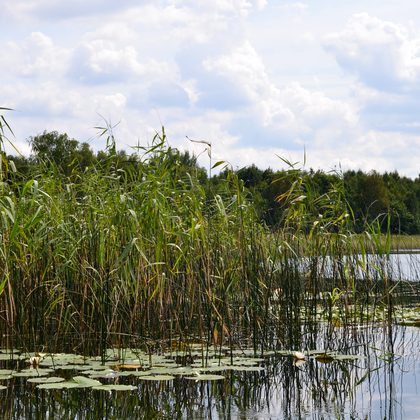
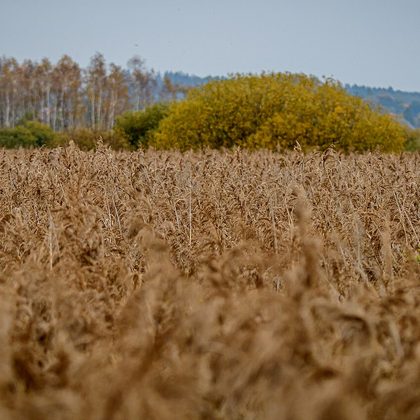
Shallow fresh and brackish marsh with open mud and low cover: marismas, flooded meadows, rice fields, fish ponds and the margins of lagoons. It feeds by walking and probing for crayfish, water beetles, frogs and worms, normally in parties of tens to hundreds of birds.
Where the bird is most at home, classified with EUNIS — the European standard for habitats.



Range and movements
The European centre of gravity is southern Spain, where Doñana holds by far the largest colony, with the Ebro Delta and the Valencian wetlands next. From there the species has spread north since the 1990s and now also breeds in southern France and Italy. In Britain it was long a rare vagrant but has become an annual visitor in small numbers, mainly between April and October, with the first British breeding recorded in Cambridgeshire in 2022; small parties now winter in the south-west. Numbers peak after a good breeding season in Spain.
- Resident
- Breeding (summer)
- Winter
- Passage
- Migration direction
- dark = core range, pale = thinly spread
Where and when to look
In Doñana go to the marisma at El Rocío: from the boardwalk, hundreds of birds stand at close range between December and March, and the raking light of the last hour before sunset brings out the green and purple gloss best. In the Ebro Delta the rice fields work best just after flooding in May, when the birds follow the tractors.
Conservation status
Not globally threatened (IUCN: Least Concern). In Europe the species is one of the clearest cases of recovery: having disappeared as a Spanish breeding bird early in the twentieth century, it returned in the 1990s and the Doñana colony grew to thousands of pairs within a few years. Numbers swing sharply with water levels and in dry years the colony stays almost empty. Drying of the marismas and the abstraction of groundwater for agriculture are the main threats.