All species › Waders, gulls and terns › Gulls and terns › Franklin's gull
Franklin's gull
Leucophaeus pipixcan | Franklins meeuw | Gaviota de Franklin
A small, dark-mantled hooded gull of the North American prairie marshes, and one of very few gulls that winters as far south as Peru and Chile. In Europe it is a scarce vagrant, given away by two things: broad white eyelids and a white bar cutting across the black wing tip.

Voice
A shrill, plaintive wee-ah repeated in series, suggesting a muted Laughing Gull but softer, higher and less raucous. A short nasal kwek goes with it. A lone vagrant among Black-headed Gulls is usually silent, so do not count on the voice to find it.
No freely licensed recording is available for this species yet.
Identification
Smaller and more compact than Black-headed Gull, with a short slim bill, a rounded crown and a short neck. The summer adult has a dark slate-grey mantle and wings, a black hood reaching well down the nape, and very broad white crescents above and below the eye. Bill and legs are dark red. The wing tip carries a black band with white tips, and between the grey of the wing and that black runs a clear white dividing bar. In winter a half hood remains, running back over the crown and giving the bird a distinctly capped look. First-winter birds resemble winter adults but are browner on the upperwing, show a black tail band that leaves the outer feathers white, and lack the white dividing bar.
Confusion species
Black-headed and Mediterranean Gull are the birds it hides among, and three features settle it. First the eyelids: on Franklin's two broad, fleshy white arcs that almost meet in front of and behind the eye, far heavier than the thin white slivers of Black-headed and stouter than the neat but narrower eye-ring of Mediterranean. Second the hood: Black-headed loses its chocolate hood entirely in winter and keeps only an ear spot, while Franklin's carries a half hood right through the non-breeding season, running back over the crown. Third the wing tip: on Franklin's a white bar separates the grey of the wing from the black of the tip, a pattern no European hooded gull shows. Beyond that, Black-headed is ruled out by the white leading edge to the outer wing, Mediterranean by its wholly white wing tip, heavy red bill and pale grey mantle. Size helps too, since Franklin's is smaller and more thickset than either.
Habitat
In Europe almost always coastal: estuarine mud and saltmarsh edges, sandy beaches and harbour mouths, and beyond that reservoirs, brackish pools and wet fields where Black-headed Gulls follow the plough. On the breeding grounds it is a marsh bird, building a floating nest in prairie freshwater marshes; the nest sinks as the material beneath decays and both parents add to it daily.
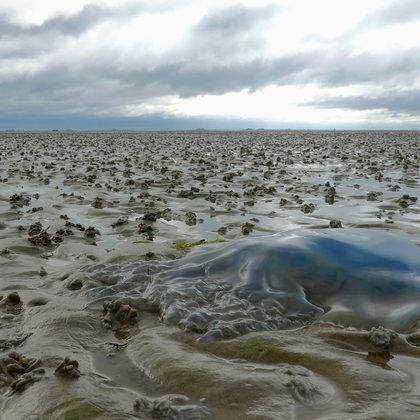
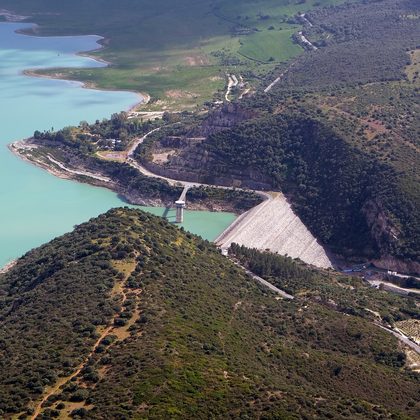
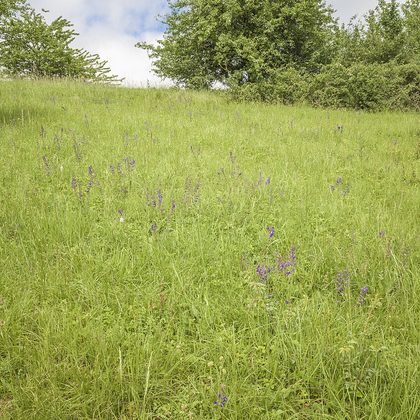
Where the bird is most at home, classified with EUNIS — the European standard for habitats.

Range and movements
Breeds on the prairies of central Canada and the northern United States and winters down the Pacific coast to Peru and Chile, the longest migration of any American gull. That overland north-south axis is exactly why transatlantic birds are scarce. Britain and Ireland account for a few dozen records, some of them long-staying birds that summer among Black-headed Gull colonies; the Netherlands has thirteen confirmed records between 1900 and 2021, and Belgium a similar scatter, including 1987, 2000, 2009, 2016, 2017 and 2021.
Where and when to look
From late summer into autumn, scan Black-headed Gull flocks on estuarine mud and behind the plough for one bird that is smaller, darker-mantled and more heavily hooded. Start at the head, because the broad white eyelids read at range and are the quickest way in. Then get the bird into flight for the white bar across the wing tip, a single view that closes the identification and settles Laughing Gull at the same time.
Conservation status
Least Concern, with a world population put at one to one and a half million birds in 2018 and an increasing trend. The species depends entirely on prairie marshes, and those are sensitive to drainage, water management and drought; a colony can vanish outright in a dry year. On migration it relies on irrigated farmland and shallow lakes through the interior of North America.