All species › Pelicans, herons and ibises › Herons and bitterns › Cattle egret
Cattle egret
Ardea ibis | Koereiger | Garcilla bueyera
The Cattle Egret is the small, stocky white heron you find not in the water but in the grass, among cattle and horses. In Spain it is one of the commonest birds of the farmed landscape; in the Netherlands it still counts in tens, but the numbers are climbing fast.

Voice
Practically silent away from colony and roost. At the colony a low, frog-like grunting rrok-rrok and a hoarse krik-krak in disputes over a nest site. In Spain it is best heard at large communal roosts in eucalyptus or village trees, in the first minutes after birds arrive around sunset.
Recording: Oliver Komar — CC BY-SA 4.0 · Wikimedia Commons
Identification
Small and compact, with a short thick neck, a humped back and a clearly visible jowl under the throat — that pouch is the fastest feature. The bill is short, thick and yellow, and the head looks round and too big for the bird. Outside the breeding season it is wholly white with grey-black to dull yellow legs; in breeding dress it gains orange-buff plumes on crown, breast and mantle, while bill and legs turn deeper orange-red, with vivid red lores at the height of display. Juveniles have a dark bill but keep the stocky build and jowl. In flight it is compact and short-necked, with quick shallow beats and feet barely projecting past the tail.
Confusion species
Little Egret is slimmer and longer legged, with a thin black bill all year and yellow toes on black legs, and feeds by dashing about in shallow water rather than walking steadily in grass. Great Egret is far larger, with a very long kinked neck and black legs and toes. A juvenile Cattle Egret with a dark bill is most often taken for a Little Egret: fall back on the posture — short, hunched, with a bulging throat — and on the association with livestock.
Habitat
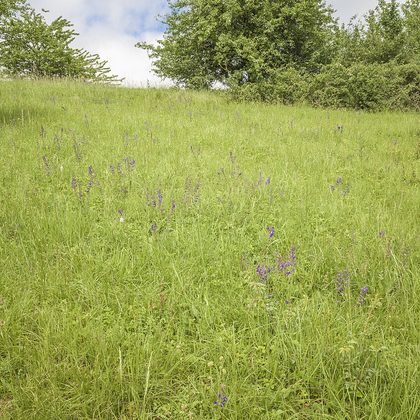
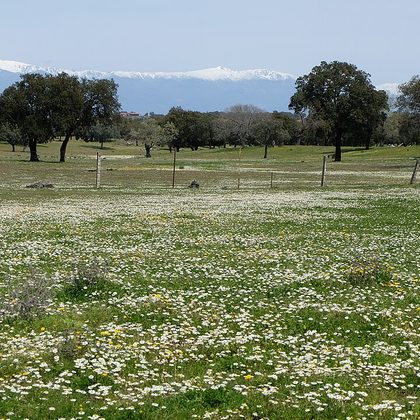
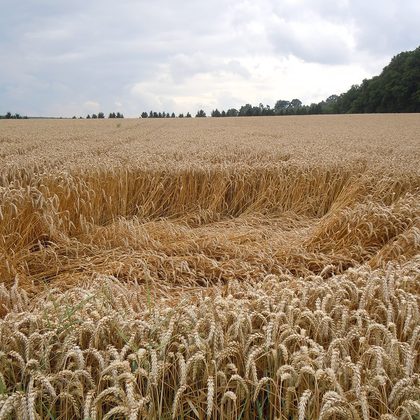
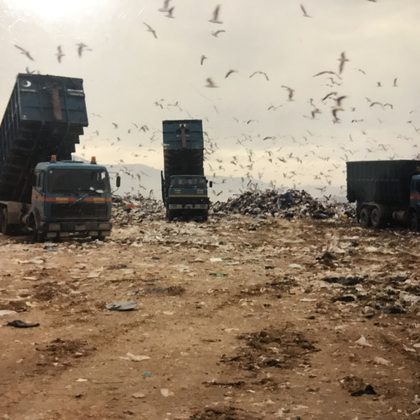
Unlike the other white herons it is largely a land bird: grazed pasture, dehesa, rough field margins, rice fields, irrigation canals and rubbish tips. It walks right behind grazing stock or the tractor and takes flushed grasshoppers, frogs and voles. Roosts communally in trees and reedbeds, often with other herons and ibises.
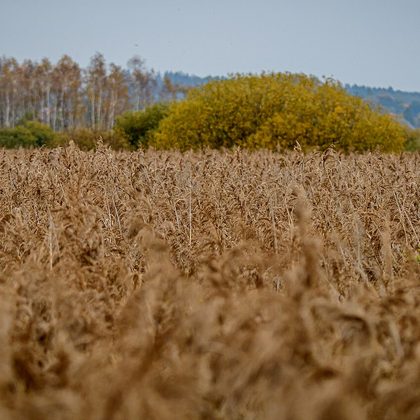
Where the bird is most at home, classified with EUNIS — the European standard for habitats.
Range and movements
In Spain it is among the commonest birds of the agricultural landscape, with tens of thousands in the Guadalquivir marismas, the Valencian rice fields and the Ebro Delta, and roosts in the middle of villages and towns. In the Netherlands it has bred only since 1998 and remains scarce, with small colonies in the Delta and North Brabant; outside the breeding season small parties appear in pasture across the country and wintering is increasingly regular. That difference in scale between the two countries is striking, and explains why many Dutch birders first get to know the species properly in Spain.
- Resident
- Breeding (summer)
- Winter
- Passage
- dark = core range, pale = thinly spread
Where and when to look
In the Netherlands, look between October and February for cattle or horses still out at grass, especially in Zeeland, West Brabant and the South Holland islands, and scan the herd; the egrets stand among the animals' legs and show at range as a lump of white. In Spain the last hour of light at a roost is spectacular, with hundreds of birds arriving in long strings.
Conservation status
Not globally threatened (IUCN: Least Concern) and one of the fastest expanding bird species in the world. The European population has grown for decades and continues to shift north, helped by mild winters and extensive livestock farming. It remains vulnerable to long frosts, which cause heavy local mortality in north-west Europe.