All species › Waders, gulls and terns › Pratincoles and coursers › Black-winged pratincole
Black-winged pratincole
Glareola nordmanni | Steppevorkstaartplevier | Canastera alinegra
The darkest of the three pratincoles and the most easterly, a bird of the saline steppes between Romania and Kazakhstan. In Britain it is a genuine rarity, first recorded in Norfolk in 1868, and it remains one of the hardest vagrants to prove even when a candidate is sitting in front of you.

Voice
A dry, hard kik-kik and a rattling kirrik, usually in flight and often from small parties. It is close enough to Collared Pratincole to be useless as an identification character; treat it only as the cue to get onto the bird.
No freely licensed recording is available for this species yet.
Identification
Darker and warmer brown above than Collared Pratincole, with a cream throat inside a black border and a red bill base. The legs are long and black, and the white eye-ring is absent or barely visible. The tail is deeply forked but the streamers are short and do not project beyond the wing tips on the perched bird. Everything else is a flight character: white rump, black tail, no white trailing edge to the wing, and an entirely black underwing cutting hard against the white belly.
Confusion species
Against Collared Pratincole there are four points, and three of them can only be seen in flight. The underwing is black rather than chestnut; the thin but clear white trailing edge along the secondaries of Collared is absent altogether; and the tail streamers are shorter, so the fork looks shallower and falls short of the wing tips at rest. All three call for a bird in flight, and preferably one seen into the light: backlit, the secondaries glow and the presence or absence of a white trailing edge is instant, while the underwing reads as a solid black panel against the white belly. On a perched bird, or in flat side light, the character is worthless, because chestnut can pass for black. Oriental Pratincole is separated at once by its chestnut underwing, though it shares the lack of a white trailing edge.
Habitat
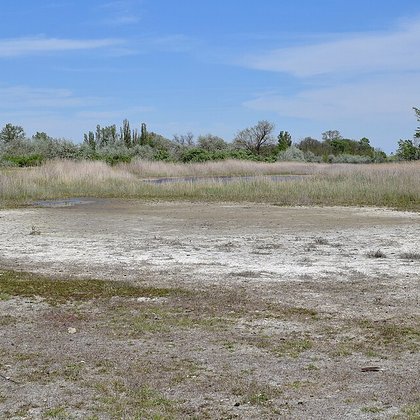
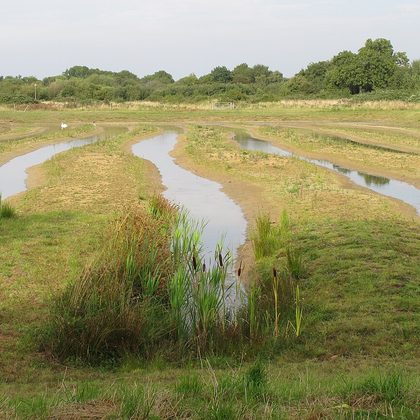
Breeds colonially on saline steppe, receding lake shores and damp plains with short, heavily grazed vegetation, often near soda lakes and salt pans. It feeds on the wing over grassland and arable, following swarms of locusts and beetles; in southern Africa it tracks the rains and locust outbreaks through the austral summer. Vagrants in western Europe turn up on bare field margins, wet meadows and drying mud.
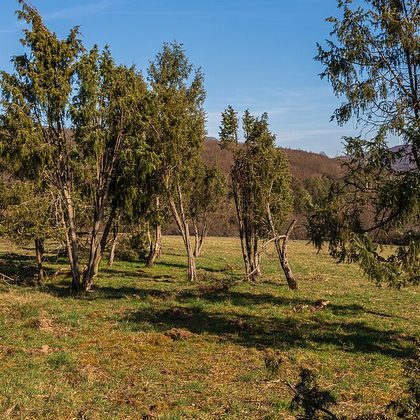
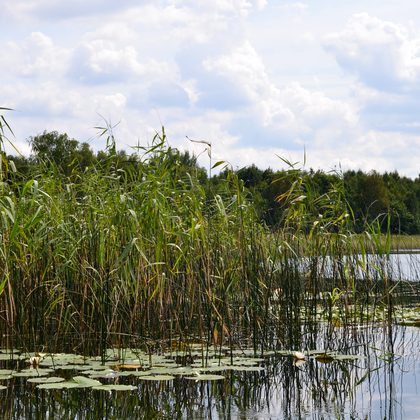
Where the bird is most at home, classified with EUNIS — the European standard for habitats.
Range and movements
Breeds from Romania and Ukraine east to eastern Kazakhstan and south-west Siberia. Effectively the entire world population winters in southern Africa, mainly Namibia, Botswana, Zimbabwe and north-western South Africa, where flocks of over a thousand gather on flooded grassland after heavy rain. British records are scattered along the east and south coasts, with a marked late-summer bias.
- Passage
- dark = core range, pale = thinly spread
Where and when to look
August is the month, and the birds appear where insects are rising: freshly cut grassland, drying clay pits and the margins of coastal lagoons. Work the light rather than the bird: stand so that a passing pratincole crosses between you and the sun, and wait for a low pass instead of chasing a perched bird, because the underwing and the trailing edge are what a submission depends on. Ten mediocre flight shots are worth more to a rarities committee than one good portrait of the bird standing.
Conservation status
Listed as Near Threatened. Numbers in European Russia have fallen steeply and the species has all but disappeared from Ukraine since the 1990s, while populations in central and north-eastern Kazakhstan are increasing. The critical problem is breeding output: trampling of nests by cattle, predation, hailstorms and drought can remove most of a season's young. Conversion of steppe to arable and the use of pesticides against locusts add to the pressure.