All species › Passerines › Thrushes › Song thrush
Song thrush
Turdus philomelos | Zanglijster | Zorzal común
Song Thrush is the thrush of gardens and mixed woodland, and the best singer of the genus: from February to July its clear, repeating phrases carry from a bare treetop above the canopy. Its anvil — a stone or kerb littered with broken snail shells — is one of the few bird signs anyone can read at a glance.

Voice
The song is unique in that every motif is repeated two or three times, sometimes four, before a new one begins: tyoo-tyoo-tyoo … kweet-kweet … chirp-chirp-chirp. It is delivered loudly and clearly from a high, open perch from late January into July, most intensely at first light and again at dusk. The call is a short sharp tsick; the nocturnal migration call a thin, slightly grating zip, shorter and less reedy than Redwing's.
Recording: Benoît Van Hecke — CC BY-SA 4.0 · Wikimedia Commons
Identification
Medium-sized, warm olive-brown above, with no obvious head pattern. Underparts are cream-buff on the breast and white on the belly, covered in small, sharply defined black drop-shaped spots that point downwards like arrowheads. In flight the underwing is warm buff to orange-buff, and the bird looks short-tailed, compact and fast. Sexes alike; juveniles show pale shaft streaks on the mantle and coverts.
Confusion species
Redwing is smaller and darker, with a long creamy supercilium, streaks rather than drops on the breast and rust-red flanks and underwing. Mistle Thrush is much larger, colder greyish-brown, longer-tailed, with bigger and more randomly scattered spots, white tail corners and a strikingly white underwing; it also flies in long undulations with the wings periodically closed. Female Blackbird is plainer brown and lacks the crisp drop pattern.
Habitat
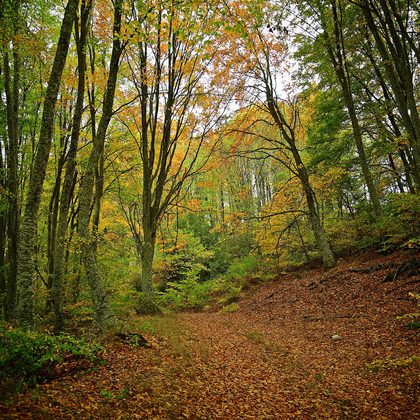
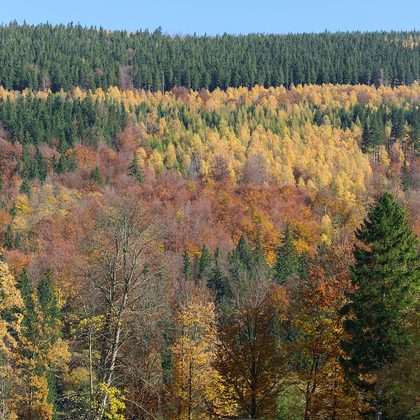
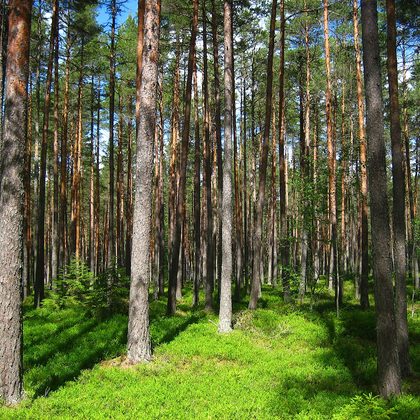
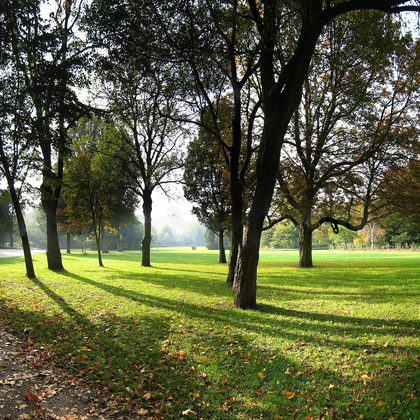
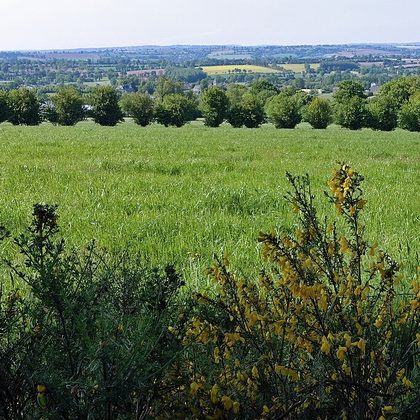
Broadleaved, coniferous and mixed woodland with a closed shrub layer and damp ground, plus hedgerows, parks, cemeteries, wooded gardens and dune scrub. Feeds on earthworms and snails in the litter layer; on migration and in winter also in hedges, vineyards and olive groves.
Where the bird is most at home, classified with EUNIS — the European standard for habitats.
Range and movements
From Ireland to Siberia. In the Netherlands a very numerous breeder in woodland, park and garden; most leave in October and return in March, but a proportion winters. In Spain it breeds in the northern half, in the Cantabrian mountains and the Pyrenees, and in winter northern birds flood the whole country, right into the olive groves of Andalusia.
- Resident
- Breeding (summer)
- Winter
- Passage
- Migration direction
- dark = core range, pale = thinly spread
Where and when to look
The first half of March, half an hour before sunrise: Song Thrush starts before Blackbird and sings from the highest bare branch in the wood or the street. In the same weeks look for an anvil — a stone ringed with shell fragments; sit a few metres off and the bird will be back within a quarter of an hour with the next snail.
Conservation status
Least Concern, and in the Netherlands actually increasing over the longer run, though it fares badly on the higher sandy soils. Across much of western Europe numbers fell sharply in the 1980s and 1990s through agricultural intensification, hedgerow removal and the drying-out of feeding grounds; that decline has largely levelled off. Severe winters cause dips that are made good after a few mild years, and hunting of migrant thrushes in southern Europe still takes millions of birds annually.