All species › Cuckoos › Cuckoos › Great spotted cuckoo
Great spotted cuckoo
Clamator glandarius | Kuifkoekoek | Críalo europeo
A big, long-tailed cuckoo of Iberian dehesa and olive grove that lays its eggs in the nests of Magpies and Carrion Crows. It is back from Africa by late January, weeks before anything is singing in northern Europe.

Voice
A loud, far-carrying rattle, kitta-kitta-kitta-kayh, like a Magpie in a hurry, plus a hoarse rising kreeah. Displaying pairs call through the morning, often from a post or a power line, which makes them easier to hear than to see.
Recording: João Tomás — CC BY 4.0 · Wikimedia Commons
Identification
Large and slim, with a long graduated tail and a conspicuous grey crest often held half raised. The upperparts are dark grey-brown with dense white droplet spots, throat and breast cream to yellowish, belly white. The tail feathers are tipped white. Juveniles have a black crown without a crest and bright rufous primaries, a strong signal in flight.
Confusion species
Common Cuckoo is smaller, plain slate grey, crestless and unspotted, with barred underparts and a low, stiff-winged, falcon-like flight. Great Spotted Cuckoo flies higher and more loosely and in silhouette can look almost like a Magpie, with the same long tail. At long range that is the real trap; the pale unbarred underside and the slow wingbeat sort it out. A juvenile with rufous wings can be confused with nothing else.
Habitat
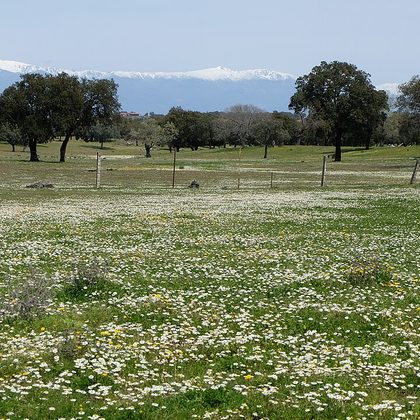
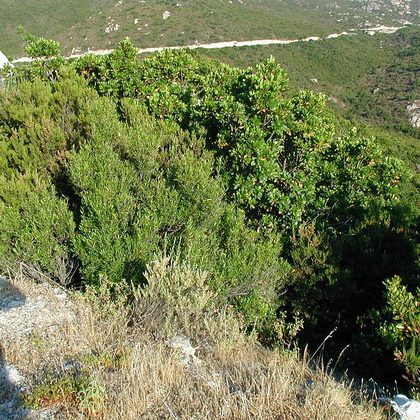
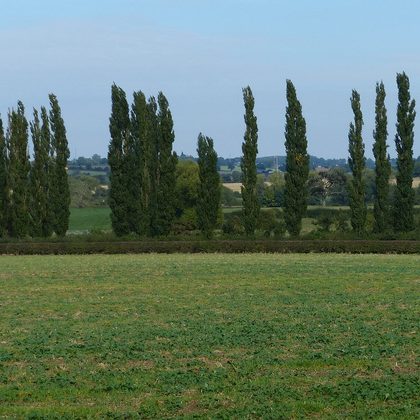
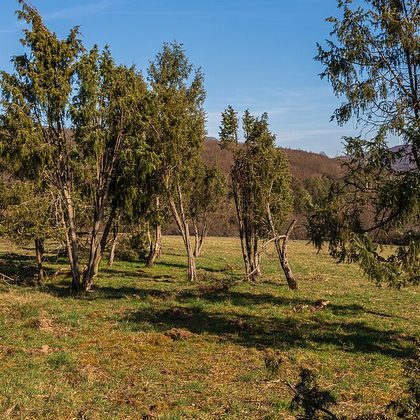
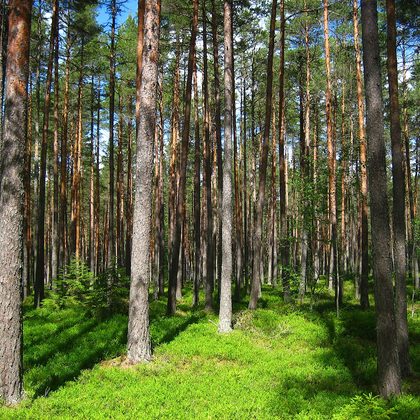
Open country with scattered trees: holm and cork oak dehesa, old olive groves, isolated pine and eucalyptus clumps in cereal land, maquis and garrigue with almond. What matters is that Magpies or crows are nesting; without hosts the bird is absent, however suitable the landscape looks.
Where the bird is most at home, classified with EUNIS — the European standard for habitats.
Range and movements
Breeds in Iberia, southern France, Italy, the Balkans, Turkey and North Africa, with the centre of gravity firmly in Spain and Portugal, and winters in Africa south of the Sahara. In Britain and Ireland it is a genuine vagrant, with a scatter of spring and autumn records, mostly on the south and west coasts.
- Breeding (summer)
- Passage
- Migration direction
- dark = core range, pale = thinly spread
Where and when to look
Go to Extremadura or Andalucia in February or March and scan isolated trees and fence posts from a track early in the day. The quickest route is indirect: watch for Magpies chattering furiously after a long grey-brown bird. Where the Magpies are angry, the cuckoo is.
Conservation status
Not threatened globally, but declining in parts of Iberia as Magpie territories thin out and as spraying against processionary moth and other insecticide use removes its staple food, hairy caterpillars. Loss of old dehesa with standard trees adds to the pressure.